Oct 21, 2026
Chicken Coop Ventilation Guide: How Much Ventilation Does a Chicken Coop Need?
Quick answer: A chicken coop needs at least 1 square foot of permanent ventilation per chicken, plus adjustable vents. Ventilation should be above the chickens’ heads so fresh air moves through the coop without blowing directly on the birds. Good airflow removes moisture and ammonia, prevents respiratory disease, and keeps chickens healthy in winter and summer.
Many coops are built too airtight. A sealed coop traps moisture and ammonia, which causes frostbite, respiratory illness, and poor egg production. This guide explains how much ventilation you need and how to get it right.
Why Ventilation Matters
Chickens produce moisture and ammonia every day through breath, droppings, and bedding. Without airflow, these build up inside the coop.
Good ventilation:
Removes moisture and prevents damp bedding
Removes ammonia that damages the respiratory tract
Reduces heat stress in summer
Prevents frostbite and illness in winter
Keeps the coop dry and odor-free
University extension services list ventilation as a top priority in backyard coop design, especially in cold weather.
How Much Ventilation Does a Coop Need?
Rule: 1 square foot of permanent ventilation per chicken.
Flock Size
Minimum Permanent Ventilation
Recommended with Adjustable Vents
4 chickens
4 sq ft
4–6 sq ft
6 chickens
6 sq ft
6–9 sq ft
10 chickens
10 sq ft
10–15 sq ft
Notes:
“Permanent” means vents stay open year-round and cannot be fully closed.
Measure the open area of the vent, not the frame.
Cover every vent with ½-inch hardware cloth to keep predators out.
Hot climates need more ventilation; cold climates still need permanent high vents.
For coop sizing, see our guide on how to choose the right chicken coop size for 4, 6, or 10 chickens.
Ventilation vs. Draft
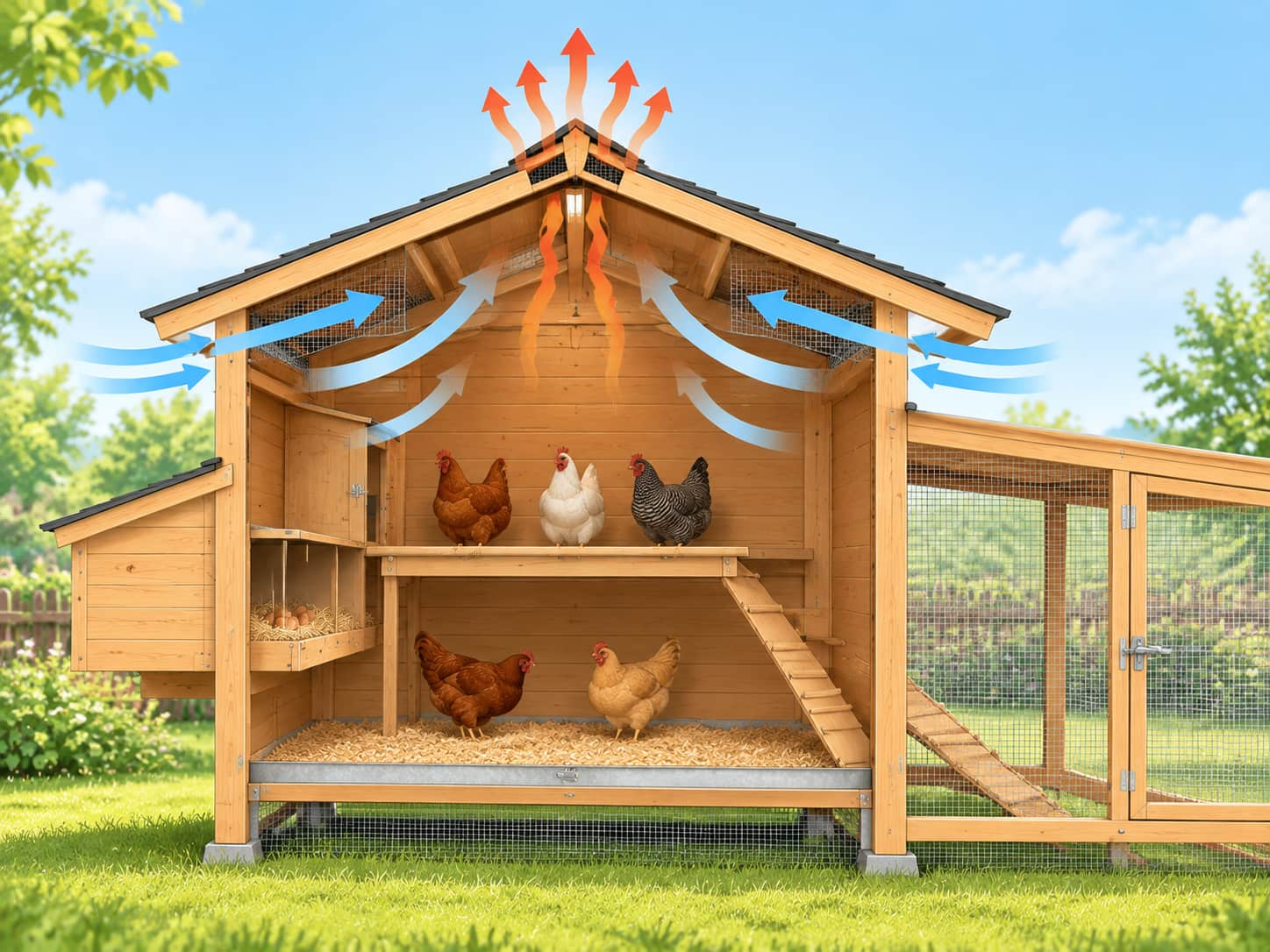
Ventilation moves fresh air above the chickens and removes moisture and ammonia.
A draft is cold air blowing directly on the chickens, especially at roost level. Drafts cause stress, frostbite, and illness.
Vent high, not low. Air in, moisture out, but no wind on the chickens.
Place vents above the chickens’ heads—near the roof, under the eaves, or in the gable. Avoid low vents that create drafts across the roost.
Best Types of Coop Ventilation
A good coop combines several types:
Permanent high vents under the eaves or near the roof
Adjustable louvered vents for seasonal control
Windows with hardware cloth and secure latches
Ridge vents along the roof peak
Gable vents for cross-flow in hot climates
Cupolas for airflow and style
Never rely on an open door as your only ventilation.
Winter Ventilation
Winter ventilation is essential—not optional.
Sealing the coop traps moisture. Damp cold is more dangerous than dry cold and causes frostbite on combs and wattles.
Winter rules:
Keep permanent high vents open year-round.
Close low drafts, not high vents.
Remove wet bedding and fix leaks.
Avoid overcrowding.
Watch for condensation on windows or walls—it means ventilation is insufficient.
A dry coop at 20°F is safer than a damp coop at 35°F.
For cold-climate coops, see our wooden chicken coops for cold climates.
Summer Ventilation
Chickens cannot sweat, so airflow is their main cooling method.
Open all adjustable vents and windows.
Add shade and cross-ventilation.
Provide extra waterers.
Use a raised coop with good roof overhang.
In hot climates, aim for more than 1 sq ft per chicken.
How to Calculate Ventilation Area
Number of chickens × 1 square foot = minimum permanent ventilation
Examples:
4 chickens = 4 sq ft
6 chickens = 6 sq ft
10 chickens = 10 sq ft
Measure each vent:
Width × Height = Vent Area
24 in × 6 in = 144 sq in = 1 sq ft
Two such vents = 2 sq ft
Conversion: 144 square inches = 1 square foot.
Add up all permanent vents. If the total is below the minimum, add more ventilation.
Signs Your Coop Needs More Ventilation
Strong ammonia smell
Condensation on windows or walls
Damp bedding
Frostbite on combs and wattles
Frequent respiratory illness
Humid or foggy air inside the coop
Chickens panting at night in summer
Signs of too much draft:
Chickens huddling away from a vent
Feather ruffling at roost level
Cold air blowing directly on the roost
Why Wooden Coops Ventilate Better
Wood is breathable and helps regulate humidity and temperature. A well-designed wooden coop can include high under-eave vents, adjustable louvered vents, ridge ventilation, removable windows, and roosts placed away from airflow.
At Shaw Ye, we manufacture premium wooden chicken coops and pet houses for backyard owners, farms, and wholesale buyers. Our coops can be customized with ventilation openings, adjustable vents, nest boxes, roosts, and branding.
Contact us for a quote or catalog:Contact Shaw Ye
Common Ventilation Mistakes
Sealing the coop in winter
Putting vents at roost level
Counting window frames as ventilation
Forgetting predator mesh
Relying only on the door
Overcrowding the coop
Ignoring wet bedding
FAQ
How much ventilation does a chicken coop need?
At least 1 square foot of permanent ventilation per chicken, plus adjustable vents. A 6-chicken coop needs at least 6 sq ft.
Should I close coop vents in winter?
No. Keep permanent high vents open year-round. You can partially close adjustable vents, but never seal the coop completely.
Where should coop vents be placed?
Above the chickens’ heads—near the roof, under the eaves, or in the gable. Avoid low vents that create drafts across the roost.
What is the difference between ventilation and a draft?
Ventilation moves air above the chickens and removes moisture. A draft blows cold air directly on the chickens, especially at roost level.
How do I calculate ventilation area?
Multiply the number of chickens by 1 sq ft. Measure each vent opening (width × height) and add them up. 144 sq in = 1 sq ft.
How can I tell if ventilation is poor?
Look for ammonia smell, condensation, damp bedding, frostbite, respiratory illness, or humid air inside the coop.
Final Thoughts
Keep these rules in mind:
1 sq ft of permanent ventilation per chicken
Vent high, not low
Keep vents open in winter
Remove moisture and ammonia
Protect every vent with hardware cloth
Adjust airflow by season, not by sealing the coop
A dry, well-ventilated coop keeps chickens healthy and productive all year. At Shaw Ye, we build customizable wooden coops with ventilation designed for real backyard conditions.
Read More



 IPv6 network supported