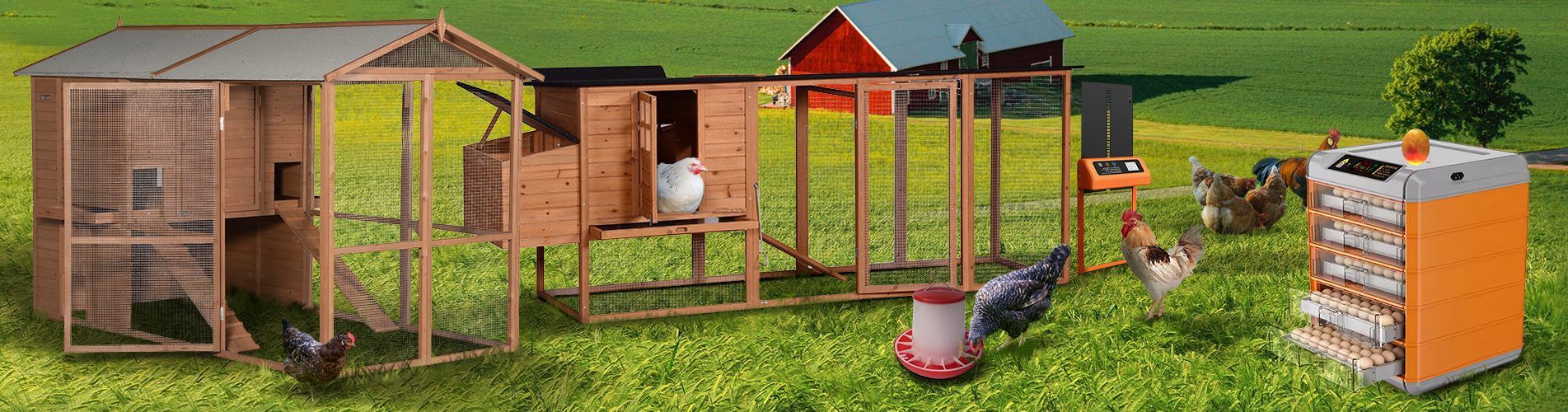
Importing wooden chicken coops from China can help garden retailers, farm supply distributors, and online sellers build a competitive product range. However, the purchase price is only one part of the total investment. Shipping, packaging, import duties, customs clearance, and local delivery can all affect the final cost of bringing chicken coops to market.
If you are comparing the China chicken coop price offered by different factories, the most useful approach is to calculate the landed cost per unit rather than choosing a supplier based on the lowest factory quotation. This guide explains the major cost factors, how to compare wholesale offers, and what information to prepare before requesting a quote.
The total cost of importing wooden chicken coops depends on the model, order quantity, packaging dimensions, shipment method, destination country, and applicable taxes. There is no single China chicken coop price that applies to every order.
The chicken coop wholesale price is influenced by more than the external dimensions. Two products that look similar in a catalog may have different material thicknesses, structural designs, weather protection, mesh specifications, and assembly requirements.
Before comparing quotations, confirm the following specifications with each manufacturer:
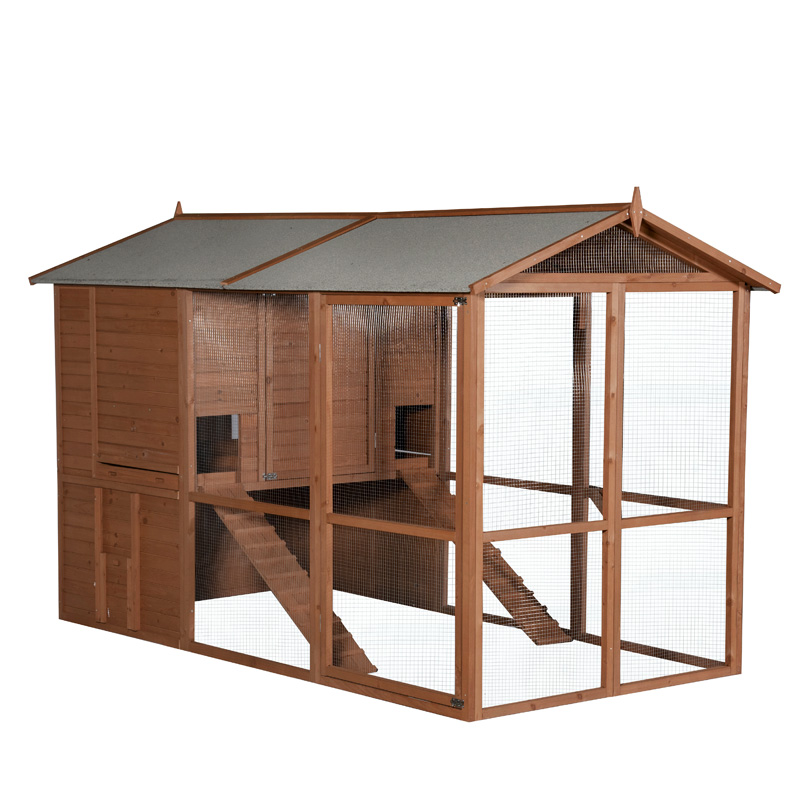
For example, the CC496 wooden chicken coop listed by Shaw Ye uses Chinese fir wood, includes a wire-mesh run and removable cleaning tray, and measures 231 × 88 × 132 cm. The listed product information specifies a 45 kg unit weight, a 100-piece MOQ, and a 30-day lead time. These details help buyers evaluate the product and plan an order, but a current quotation is still needed to confirm the actual unit price.
Shipping cost is often one of the most important variables when you import chicken coops from China. Wooden chicken coops can be bulky, especially when they include an enclosed run, roof panels, and nesting boxes. Their shipping cost may therefore depend heavily on packed volume rather than product weight alone.
| Shipping Method | Best For | Main Consideration |
|---|---|---|
| Sea freight | Medium and large wholesale orders | Transit time, container utilization, and destination charges |
| LCL sea freight | Smaller orders that do not fill a container | Consolidation, minimum charges, and handling fees |
| Air freight or courier | Samples and urgent small shipments | Dimensional weight and higher transport costs |
For most commercial orders of wooden chicken coops, sea freight is worth evaluating first. However, the best option depends on the number of units, packed carton dimensions, delivery deadline, and final destination. A low freight rate is not necessarily the cheapest option if it excludes destination handling, customs clearance, or delivery to your warehouse.
Ask the supplier for the packed dimensions of each unit and the total shipment volume. Then request a freight quotation based on your destination port or delivery address. Compare quotes using the same shipment details and service scope.
The landed cost is the total cost of getting a product to the agreed destination, including the relevant purchasing, freight, import, and handling expenses. For a distributor or retailer, it is a more useful buying metric than the factory price alone.
Landed cost per unit = Total product cost + total shipping and import expenses, divided by the number of saleable units received.
Use the following worksheet to organize your estimate:
| Cost Item | Information to Collect |
|---|---|
| Product purchase | Confirmed unit price × order quantity |
| Export packaging | Any packaging charges not included in the quotation |
| International freight | Freight quotation for the confirmed shipment volume and route |
| Import charges | Applicable duties, taxes, brokerage, and inspection costs |
| Destination logistics | Port handling, warehouse delivery, and unloading if applicable |
| Total landed cost per unit | Total applicable costs ÷ saleable units received |
Do not automatically treat every tax as a permanent cost. For example, import VAT or GST may be recoverable for eligible businesses under local rules. Confirm the applicable treatment with your customs broker or tax adviser. Also consider inspection, storage, financing, and potential damage or missing components when building a realistic commercial budget.
Wooden chicken coops may be subject to import rules that differ by destination and product construction. Requirements can depend on whether the shipment contains solid wood, engineered wood, wooden packaging, or other regulated materials.
Do not assume that every wooden product needs the same certification or treatment. Requirements should be checked for the specific product, packaging materials, and destination before shipment.
Ask whether the coop can be shipped in a flat-packed or disassembled format without compromising product protection. Efficient packaging can improve container utilization and reduce the freight cost allocated to each unit. Request actual packed dimensions rather than estimating from the assembled product size.
A small backyard coop, a model with an extended run, and a larger hen house may attract different customer groups. Start with products that match your customers' budgets, garden sizes, and flock requirements. Ordering too many variations can complicate inventory planning and after-sales support.
Request quotations for more than one quantity, such as an initial order and a planned repeat order. This helps you understand whether a higher order quantity changes the unit price, production schedule, or freight efficiency. Avoid purchasing more than you can sell simply to obtain a lower unit price.
A clear inquiry helps a factory and freight forwarder provide more useful estimates. When contacting a Chinese chicken coop supplier, include:
Shaw Ye manufactures wooden pet houses and chicken coops and supports OEM and ODM orders. You can review the available wooden chicken coop range before sending your product specifications and destination details for a tailored quotation.
No. Compare the materials, included accessories, packaging, quality-control process, lead time, and delivery terms. A lower factory price may not result in a lower landed cost if freight or additional charges are higher.
It depends on the model and stock availability. Shaw Ye's category information states that many models have MOQs of 50 or 100 units, while certain stocked models may be available in quantities of one or two. Confirm the MOQ for your selected product before planning the shipment.
Provide the freight forwarder with the total packed volume, gross weight, carton count, destination, and preferred delivery terms. Ask for a breakdown of origin charges, main freight, destination charges, customs clearance, and final delivery where applicable.
Production time varies by model, order quantity, customization, and factory schedule. The CC496 product page lists a 30-day lead time, but buyers should confirm the current schedule and whether the quoted period includes packaging and dispatch preparation.
The most reliable way to estimate the cost of importing wooden chicken coops from China is to compare complete quotations on the same product and shipping basis. With confirmed specifications, packed dimensions, order quantities, and destination details, distributors and retailers can make more informed purchasing decisions and protect their margins.


 IPv6 network supported