Oct 23, 2026
Wooden chicken coops can be a useful addition to the product range of garden retailers, farm supply stores, pet product distributors, and e-commerce businesses. Customers may be looking for a compact hen house for a small backyard, a coop with an enclosed run, or a larger structure with nesting boxes and easy-clean features.
For B2B buyers, sourcing wholesale wooden chicken coops involves more than comparing unit prices. The right product mix, supplier reliability, packaging efficiency, quality consistency, and after-sales support all affect long-term profitability. This guide explains how distributors and retailers can evaluate products, plan bulk chicken coops orders, and choose a supplier that fits their business model.
Quick Answer: How Should You Buy Chicken Coops Wholesale?
Start by identifying your target customers, selecting a small number of suitable product models, and requesting a quotation that includes product specifications, MOQ, packaging, lead time, and shipping terms. Before committing to a large order, evaluate a sample or inspect a production unit whenever practical.
Choose products based on customer needs rather than appearance alone.
Compare specifications and landed costs, not just factory prices.
Confirm the MOQ and production schedule for every model.
Check packaging dimensions, assembly instructions, and replacement-part availability.
Build a repeat-order plan around sales data and seasonal demand.
1. Identify the Right Wooden Chicken Coop for Your Customers
A wholesale range should cover distinct customer needs without creating unnecessary inventory complexity. For example, customers with only a few hens may prioritize a compact footprint and simple cleaning, while households with larger flocks may need an extended run and more accessible nesting areas.
Product Type
Typical Buyer Priority
What to Check
Compact wooden coop
Affordable entry-level option for small flocks
Footprint, ventilation, access doors, and cleaning convenience
Coop with nesting boxes
Backyard chicken keepers who need convenient egg collection
Box access, hinged lids, usable interior space, and hardware
Coop with enclosed run
Customers looking for an integrated shelter and outdoor enclosure
Mesh construction, access points, ramp design, and overall dimensions
Large wooden chicken coop
Buyers needing more space for a larger flock
Actual usable space, structural stability, packaging, and delivery access
Do not rely on advertised flock capacity alone. Ask how the capacity is determined and consider the available indoor and outdoor space, local animal-welfare guidance, and the needs of the intended breed and climate. Clear product information can also reduce customer complaints and returns.
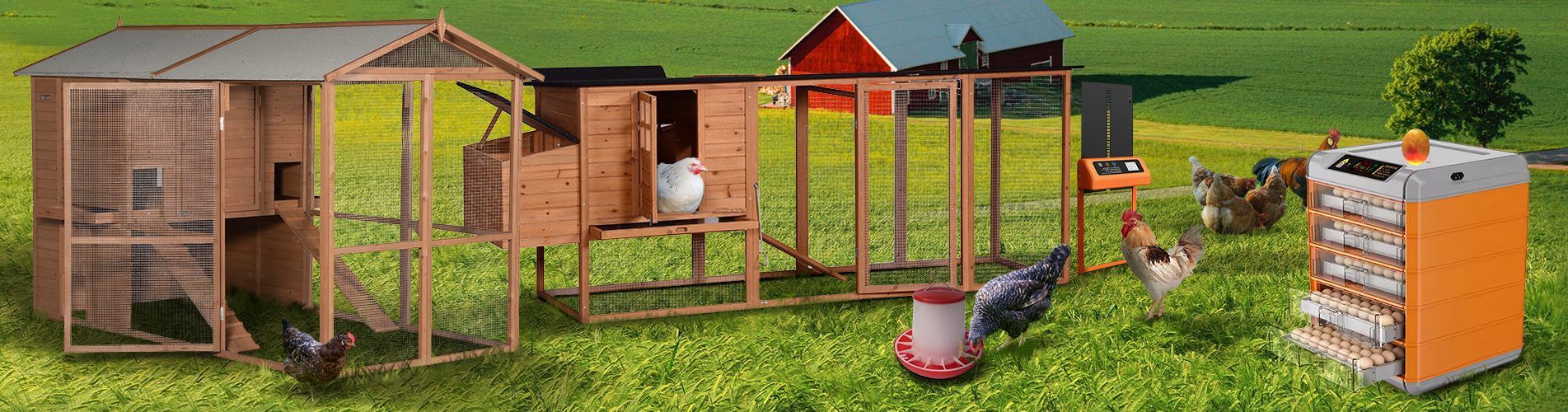
You can compare available models in the wooden chicken coop product category, which includes designs with nesting boxes, ramps, enclosed runs, and pull-out cleaning trays.
2. Evaluate a Chicken Coop Wholesaler Beyond Price
A reliable chicken coop wholesaler should be able to explain how products are made, how orders are checked, and how problems are handled after delivery. These details matter when you are responsible for selling products under your own brand or supplying multiple retail locations.
Manufacturing Experience and Production Capacity
Ask whether the supplier operates its own production facility or relies mainly on external sourcing. Review its manufacturing experience, production processes, quality-control procedures, and ability to manage repeat orders. If possible, request a factory audit, live video inspection, or third-party inspection before shipment.
Fuzhou Shaw Ye Arts & Crafts Co., Ltd. states that it has manufactured wooden pet houses and related products since 1998. Its factory information describes a production facility in Zhenghe County, Fujian, and support for OEM and ODM orders. Buyers should still verify the capacity and schedule available for their specific order.
Materials and Quality Control
For wooden chicken coops, ask for the wood species, material thickness, moisture-control process, surface finish, and roof construction. Check the quality of joints, mesh attachment, hinges, latches, screws, and other hardware. Outdoor products should be evaluated for the conditions in which customers will use them, including rainfall, humidity, sunlight, and temperature changes.
If a supplier mentions FSC or other certifications, ask which products, materials, or operations the certification covers and request current supporting documents. Do not assume a company-level certificate automatically applies to every product in its catalog.
Customization and Communication
Distributors may need private-label packaging, customized colors, logos, revised dimensions, or specific accessories. Confirm whether these changes are available, whether they affect MOQ and lead time, and whether the supplier will provide an approved sample or drawing before production.
3. Understand MOQ and Bulk Chicken Coops Pricing
Minimum order quantity is an important consideration when purchasing bulk chicken coops. A higher MOQ may make sense for established distributors with predictable demand, while smaller retailers may need a more flexible starting order or a model available from stock.
Shaw Ye's chicken coop category states that the MOQ for many models is 50 or 100 units, while certain stocked models may be available in quantities of one or two. These are general guidelines rather than a universal MOQ for every product. Confirm the exact requirement for each model and any mixed-order arrangement before placing an order.
Order Planning Factor
Questions to Ask
MOQ per model
Does each design have a separate minimum quantity?
Mixed-model orders
Can different sizes or colors be combined in one order?
Volume pricing
What are the quoted prices at different quantities?
Customization
Do logos, colors, or packaging changes increase the MOQ?
Repeat orders
Can the supplier maintain the same specifications and packaging for future batches?
Request a price schedule for several realistic quantities rather than asking only for the lowest possible unit price. Compare the unit cost alongside inventory investment, storage requirements, expected sales velocity, and freight cost per unit. A large order is beneficial only if the savings outweigh the additional stock risk.
4. Calculate Your Total Purchasing Cost and Retail Margin
The factory quotation does not necessarily represent the cost of a product ready for resale. Add international freight, import duties, customs-related expenses, local delivery, warehouse handling, and any other applicable costs before setting a retail price.
Landed cost per unit = Total order and import costs ÷ number of saleable units received.
For example, if you are comparing two supplier quotations, use the same product specifications, quantity, packaging requirements, and delivery terms. Then calculate the landed cost per unit for both offers. This avoids choosing a lower factory price that ultimately produces a higher cost after freight and handling.
When setting your selling price, distinguish gross margin from markup. Gross margin is calculated as (selling price − cost of goods sold) ÷ selling price. Markup is calculated as (selling price − cost of goods sold) ÷ cost of goods sold. Use the metric your business normally applies and remember that payment fees, advertising, storage, returns, and operating expenses can reduce the final profit.
5. Plan Packaging, Shipping, and Inventory
Wooden chicken coops can occupy substantial shipping volume when fully assembled. Ask whether a model can be packed in a disassembled format and request the actual carton dimensions, gross weight, and packing list. These details help freight forwarders estimate container utilization and provide comparable quotations.
For retailers, packaging should also be suitable for warehouse storage and onward delivery. Confirm that each carton contains the correct hardware, assembly instructions, and labeled components. Consider how cartons will be unloaded and moved at the destination, particularly if the products will be delivered to individual customers rather than a distribution center.
Build inventory plans around seasonal demand in your target market. Garden and backyard poultry products may experience changes in demand throughout the year, so use your own sales history, distributor forecasts, and supplier lead times to determine when to reorder. Leave enough time for production, freight, customs clearance, and local delivery.
6. Reduce Returns with Better Product Documentation
For distributors and retailers, product information is part of the buying experience. Accurate dimensions, clear assembly instructions, realistic capacity descriptions, and detailed product photos help customers understand what they are purchasing.
Provide assembled dimensions and package dimensions separately.
Explain the included roof, mesh, nesting boxes, ramps, trays, and hardware.
Use clear photographs showing access doors, cleaning features, and the enclosed run.
Confirm whether basic tools are required for assembly.
Agree on a process for reporting transit damage or missing components.
Before mass production, document the approved product specification and packaging standard. If a product is customized, retain the approved drawings, colors, logo files, and sample references. This creates a clearer basis for quality checks and repeat orders.
7. A Practical Checklist for Choosing a Wholesale Supplier
Before confirming your order, use this checklist to compare potential suppliers on a consistent basis:
Product specifications and material details have been confirmed in writing.
MOQ, unit price, payment terms, and production lead time are clear.
Packaging dimensions, gross weight, and carton quantities are available.
The supplier has explained its quality-control and pre-shipment inspection process.
Customization scope and any additional charges have been confirmed.
Shipping terms and responsibility for import clearance are clearly defined.
The process for handling defects, transit damage, and missing parts is documented.
The quotation and supporting documents match the final order specifications.
A supplier that answers these questions clearly can make procurement easier to manage, particularly when your business depends on consistent specifications and repeat shipments.
Frequently Asked Questions
What is the usual MOQ for wholesale wooden chicken coops?
MOQ depends on the model, stock availability, and customization requirements. Shaw Ye states that many chicken coop models have MOQs of 50 or 100 units, while certain stocked models may be available in smaller quantities. Always confirm the MOQ for the exact SKU.
Can distributors order customized wooden chicken coops?
Customization may include colors, logos, dimensions, accessories, or packaging. Confirm the available options, sample requirements, tooling or setup charges if any, and the effect on MOQ and production lead time before placing an order.
How can retailers compare two chicken coop suppliers fairly?
Compare equivalent product specifications and order quantities, then review the complete landed cost, packaging, production schedule, quality-control process, and after-sales arrangements. Do not compare unit prices alone if the products or delivery terms differ.
What information should I send when requesting a wholesale quote?
Include product models, quantities, customization requirements, destination, preferred shipping terms, and target delivery date. If you have a target retail channel or packaging specification, include that information as well.
For distributors and retailers looking to develop a reliable product range, Shaw Ye offers a selection of wooden chicken coops and supports OEM and ODM inquiries. Browse the wooden chicken coop catalog and contact the team with your target models, order quantity, and destination to discuss a wholesale quotation.
Read More



 IPv6 network supported