Apr 08, 2026
The Unrivaled Choice: Why Wooden Chicken Coops Remain the Gold Standard for Discerning Poultry Keepers
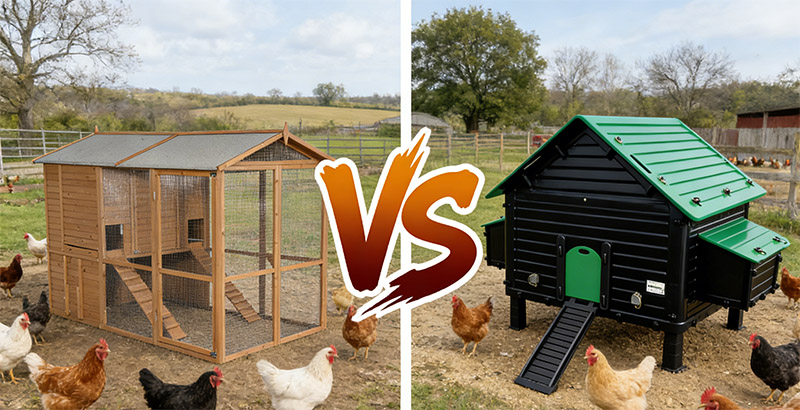
In the evolving world of backyard poultry, trends come and go. Recent market data from 2024 confirms a shift: plastic chicken coops, once a niche product, now account for about 33.4% of the market, appealing largely to urban hobbyists and first-time owners seeking the ultimate in convenience. However, the same data reveals a powerful truth: 62% of poultry keepers—the vast majority—still trust and prefer wooden chicken coops.
As a dedicated manufacturer of premium wooden coops, we understand that this preference is not merely about tradition. It is a choice rooted in a deep understanding of animal husbandry, environmental responsibility, and long-term value. While plastic coops offer a quick-fix solution, wood provides a holistic home. Let’s explore the profound and practical reasons why wooden coops continue to be the heart of healthy, thriving flocks across Europe and North America.
1. The Science of Shelter: Superior Thermal Dynamics and Respiratory Health
The health of your flock begins with the air they breathe and the temperature they endure. This is where the fundamental properties of wood set it apart from plastic.
Natural Thermoregulation: Wood is a naturally porous material composed of millions of tiny air pockets. This cellular structure makes it a phenomenal insulator. In the depths of winter, a well-built wooden coop acts like a thermal battery, trapping the collective body heat of the flock to keep the interior significantly warmer than a plastic structure. Conversely, during a summer heatwave, wood’s low thermal conductivity means it stays cool to the touch, resisting the sun’s radiant heat and providing a shaded, temperate refuge. Plastic, on the other hand, is prone to extreme temperature swings—becoming an oven in direct sun and a freezer when the temperature drops.
Breathability and Moisture Control: Perhaps even more critical than temperature is moisture management. The single biggest threat to poultry respiratory health is ammonia fumes, which build up from droppings mixed with moisture. Wood’s natural breathability allows moisture vapor to pass through it, preventing condensation from forming on walls and ceilings. This "wicking" action helps keep the coop interior dry and significantly reduces the risk of respiratory diseases like Aspergillosis. Plastic, being non-porous, often traps humidity inside. This leads to condensation ("sweating" walls), which creates a damp, ammonia-rich environment that is a breeding ground for illness.
2. Engineering for a Lifetime: Durability and Structural Integrity
A coop is an investment in your flock's future. When you choose a wooden coop from a quality manufacturer, you are choosing a structure built to withstand the elements for decades.
Resistance to the Elements: While all materials face wear and tear, high-quality wood, when properly treated and constructed, offers remarkable resilience. Modern wood treatments and exterior-grade paints create a formidable barrier against rain, snow, and UV degradation. Unlike plastic, which can become brittle and crack over time due to sun exposure, or warp under extreme temperature fluctuations, quality timber maintains its structural integrity. A wooden coop with a well-designed roof overhang and treated base will shed water effectively for years.
Robustness Against Predators: A coop must be a fortress. Plastic panels, even those touted as "durable," can sometimes be chewed through by determined predators like raccoons or rats, or can crack under impact. A well-constructed wooden coop, built with solid timber and secured joints, provides a physical barrier that predators find far more difficult to breach. The inherent strength of wood gives keepers peace of mind that their flock is safe at night.
3. The Joy of a Living Space: Customization and Evolution
No two flocks or backyards are the same. A coop should be adaptable to your unique needs, and wood is the ultimate medium for personalization.
Adaptability for Flock Dynamics: Your poultry-keeping journey will evolve. You might add new breeds, increase your flock size, or decide to try your hand at breeding. A wooden coop can evolve with you. Need to install a larger pop-hole door for your heavy breed? Want to add a custom-built roosting bar arrangement? Need to partition off a section for a broody hen and her chicks? With simple tools, you can drill, saw, and modify a wooden coop with ease. This flexibility is simply impossible with the injection-molded, one-piece construction of most plastic coops.
Aesthetic Harmony and Personal Expression: Your backyard is an extension of your home. A utilitarian plastic coop can look jarringly out of place in a carefully cultivated garden. Wooden coops offer timeless aesthetic appeal. They can be painted to match your house, stained to blend with a natural landscape, or left to weather to a beautiful, silvery patina. This ability to harmonize with your property’s design is a key reason why keepers choose wood—it enhances the beauty of their outdoor space rather than detracting from it.
Repairability: Time and weather may take their toll, but damage to a wooden chicken coop is almost always repairable. A rotting floorboard? Replace it. A loose hinge? Screw it back into solid wood. A faded paint job? Sand and repaint. This "make-do-and-mend" philosophy is central to sustainable living and is a huge advantage over plastic, where a crack or broken panel often means the entire unit is beyond repair and destined for the landfill.
4. An Honest Look at Maintenance and Pest Resistance
One of the primary marketing angles for plastic coops is the promise of a "red mite free" and "maintenance-free" existence. As experienced manufacturers, we believe in providing an honest, balanced view.
Addressing the Red Mite Concern: It is true that red mites can hide in the cracks and crevices of wood. However, this is not an inevitability; it is a design and maintenance consideration. A well-designed wooden coop from a reputable manufacturer features:
Seamless Construction: Minimal joints and carefully fitted boards reduce hiding places.
Smooth, Painted Surfaces: High-quality, multi-layer paint seals the wood, creating a surface that is just as inhospitable to mites as plastic. Mites cannot burrow into painted, sealed wood.
Cleanable Interiors: Modern wooden coops are designed with cleanability in mind, featuring smooth interior surfaces and sometimes even removable floors and panels for easy access.
Proactive Management: A simple, annual routine of cleaning, followed by dusting with food-grade diatomaceous earth (a natural powder) into joints and crevices, completely eliminates any mite risk. This small effort is a fraction of the work required to maintain a healthy garden.
The Myth of "Maintenance-Free": Nothing is truly maintenance-free. While plastic requires no painting, it does require careful cleaning with specific products to avoid damage. It can also harbor bacteria in microscopic scratches that appear over time. The "maintenance" of a wooden coop—an enjoyable afternoon of applying a fresh coat of natural stain or paint once a year—is often seen by keepers not as a chore, but as an act of care that protects their investment and keeps their coop looking beautiful.
5. The Ethical and Environmental Imperative
For a growing number of keepers, the choice of coop is an environmental one.
A Sustainable, Renewable Resource: Wood, sourced from responsibly managed forests, is the ultimate renewable building material. It has a significantly lower carbon footprint to produce than petroleum-based plastics. By choosing a wooden chicken coop, you are supporting sustainable forestry and choosing a product that stores carbon rather than emitting it during its manufacture.
Biodegradability and End of Life: A high-quality wooden coop can last 15-20 years or more with proper care. When it finally reaches the end of its long life, it will biodegrade naturally and return to the earth. Plastic coops, however, are destined for landfills where they will persist for hundreds of years, breaking down into harmful microplastics. For the eco-conscious poultry keeper, the choice is clear.
Conclusion: A Legacy of Health, Beauty, and Value
The decision to keep poultry is a return to a simpler, more connected way of life. Your coop should reflect that philosophy. While plastic offers a sterile, short-term convenience, wood offers a living, breathing home for your flock.
By choosing a wooden chicken coop from our factory, you are not just buying a shelter; you are investing in:
The long-term health and comfort of your birds.
The beauty and harmony of your backyard.
A durable, repairable structure that will last for generations.
An environmentally responsible choice you can feel good about.
For the 62% who choose wood—and for the 33.4% considering their next coop—the message is clear: Wood is not just the traditional choice; it is the smarter, more sustainable, and ultimately more rewarding choice for a happy, healthy flock. Trust the material that has served farmers and families for centuries. Choose a wooden coop.
Read More



 IPv6 network supported