Oct 30, 2026
When sourcing chicken coops for a retail or distribution business, material selection affects much more than product appearance. It influences manufacturing cost, product dimensions, shipping efficiency, customer expectations, maintenance requirements, and the types of markets a product can serve.
Wooden and plastic chicken coops are two established options. Plastic models are often promoted for easy cleaning and low routine maintenance, while wooden coops remain popular for their natural appearance, flexible construction, and range of sizes. Neither material is automatically the best choice for every customer.
This guide compares wood vs plastic chicken coop products from a retail buyer's perspective, helping importers, garden retailers, agricultural suppliers, and private-label brands make more informed purchasing decisions.
Quick Answer: Wooden or Plastic Coop?
A wooden coop is often a strong choice when customers want a natural garden appearance, larger structures, flexible layouts, and the option to repair or customize components. Plastic coops can be attractive to buyers who prioritize smooth surfaces, quick cleaning, and reduced exposure to moisture-related deterioration.
For retailers, the better product depends on the target customer, climate, price range, available storage space, and product positioning. A well-designed wooden coop can compete effectively when it offers reliable construction, suitable weather protection, practical cleaning access, and secure hardware.
1. Material and Construction: How Are They Different?
Wooden chicken coops
Wooden coops are usually assembled from timber frames, wall panels, roof supports, doors, nesting boxes, and other individual components. The structure can be manufactured in a wide range of shapes and sizes, from compact backyard hen houses to larger coops with attached runs.
Because wood can be cut and fastened using conventional woodworking processes, manufacturers can adjust dimensions, add openings, modify nesting-box layouts, and develop different product styles. This flexibility is useful for retailers serving customers with different garden sizes and flock requirements.
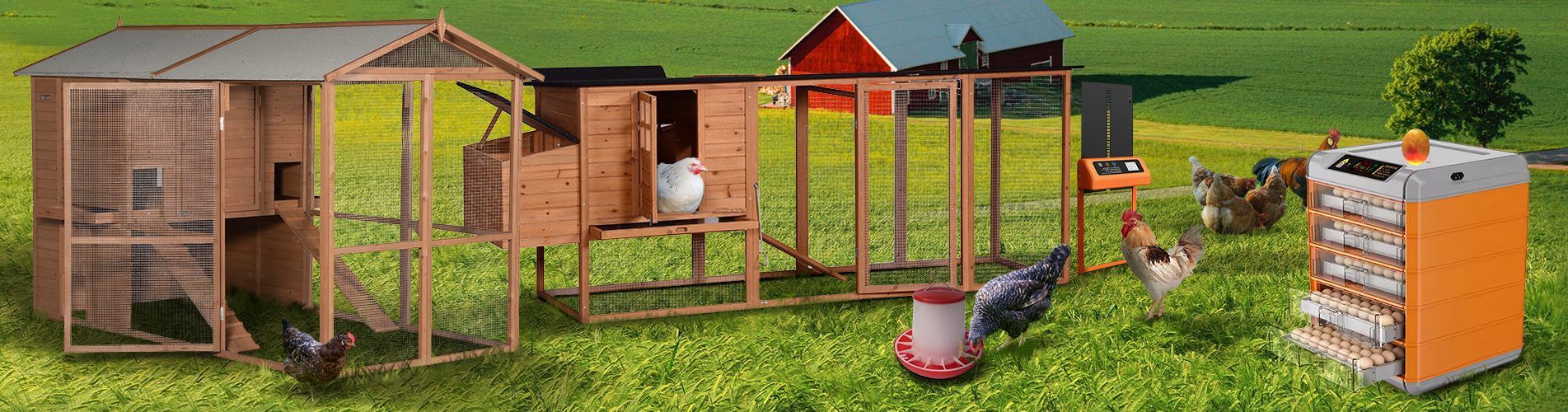
For example, a wooden chicken coop with run can combine an enclosed sleeping area, nesting box, ramp, and outdoor wire enclosure in one product configuration.
Plastic chicken coops
Plastic coops are commonly produced using molded or assembled polymer panels. Depending on the design, they may feature smooth walls, removable floors, molded perches, and integrated cleaning components.
The manufacturing process can produce consistent shapes and smooth surfaces. However, large molded components may require dedicated tooling, and product dimensions are often more closely tied to the original mold design. Customization is possible, but changing the overall structure may be more complicated than modifying a timber-based product.
2. Wooden vs Plastic Chicken Coop: Complete Comparison
Buying Factor
Wooden Coop
Plastic Coop
Appearance
Natural, traditional, garden-friendly
Modern, uniform, functional
Cleaning
Requires attention to joints and porous surfaces
Smooth surfaces are generally easier to wipe or rinse
Moisture resistance
Depends on timber, finish, drainage, and construction
Plastic itself does not absorb water like timber
Insulation
Timber provides some natural thermal resistance
Depends on wall thickness and single- or double-wall design
Customization
Relatively flexible to modify
Often limited by mold and panel design
Repair
Individual timber parts can often be replaced
May require model-specific replacement parts
Product size
Suitable for varied layouts and larger structures
Varies by design; many models focus on smaller flocks
Maintenance
May need periodic inspection and surface protection
Usually requires less material-related maintenance
Shipping considerations
Flat-pack designs can improve container utilization
Large molded parts may affect carton dimensions
These are general product tendencies rather than fixed rules. Actual performance depends on the timber species, polymer type, wall construction, hardware, assembly quality, and product design.
3. Cleaning and Hygiene: A Major Customer Consideration
Cleaning is one of the most frequent tasks in chicken keeping, so it can strongly influence customer satisfaction.
Plastic has an advantage in many cleaning situations because smooth, non-porous surfaces are generally easier to wipe down. Droppings and dirt are less likely to become embedded in the surface itself. Some models also feature removable floors or trays that simplify routine maintenance.
Wood requires a more design-conscious approach. Timber can absorb moisture, and joints or gaps may collect dirt. However, a wooden coop can still be designed for practical cleaning. Removable trays, accessible nesting boxes, large maintenance doors, smooth interior surfaces, and well-positioned access points can make a significant difference.
Retail buyers should not evaluate hygiene based only on the main wall material. Ask suppliers to demonstrate how the nesting area, floor, roosting area, and removable components are cleaned. A product with convenient access and replaceable parts may offer a better everyday experience than a model with smooth walls but difficult-to-reach corners.
4. Weather Performance: Consider the Destination Market
Climate has a direct impact on chicken coop performance. Retailers importing products for different regions should assess rainfall, humidity, temperature variation, sunlight exposure, and seasonal wind conditions.
In wet and humid regions
Plastic does not absorb rainwater like wood, which can reduce some moisture-related maintenance concerns. Wooden coops need effective roof coverage, raised bases, suitable surface protection, and good drainage. Timber that remains wet for extended periods is more vulnerable to deterioration.
In cold regions
Wood offers some natural thermal resistance, but the material alone does not determine whether a coop is suitable for winter. Ventilation, protection from direct drafts, roof insulation, floor design, and the ability to keep bedding dry are also important.
A coop should allow humid air to escape without exposing birds to strong drafts at roosting level. Excess moisture inside the shelter can create problems even when the outside temperature is not extremely low.
In hot and sunny regions
Both materials require suitable ventilation and shade. Plastic models should be evaluated for heat buildup, wall construction, and UV resistance. Wooden coops also need sufficient airflow, shaded placement where possible, and a roof that limits direct solar exposure.
5. Durability and Repair: Look Beyond the Initial Purchase Price
Durability should be evaluated as a complete product characteristic rather than a simple comparison between wood and plastic.
A wooden coop can experience moisture damage, cracking, loose fasteners, or roof deterioration if material selection and construction are inadequate. However, its modular nature can make individual components easier to repair. A damaged door, panel, or support piece may be replaceable without discarding the entire product.
Plastic does not rot, but it is not indestructible. The performance of a plastic coop depends on resin quality, wall thickness, UV stabilization, connection design, and exposure conditions. Impact damage or a cracked molded component may be more difficult to repair if the manufacturer does not provide replacement parts.
For retailers, spare-part availability is a valuable supplier evaluation point. Ask whether doors, trays, roof panels, hinges, connectors, and other frequently used components can be purchased separately. This can reduce the cost and complexity of after-sales support.
6. Shipping, Packaging, and Inventory: Important Factors for Wholesale Buyers
Product material affects shipping and warehousing, but the overall design often matters more than the material category alone.
Flat-pack wooden coops
Wooden chicken coops can be designed with knock-down structures. Panels and components are packed separately, which can help reduce the shipping volume compared with fully assembled products. This is especially useful for importers purchasing multiple units.
However, flat-pack products need clear assembly instructions, accurately drilled components, labeled hardware, and protective packaging. Poorly organized fittings or unclear instructions can increase customer complaints and returns.
Plastic coop packaging
Plastic products may use stackable or nested components, depending on their shape. Large molded panels can take up considerable carton space if they cannot nest efficiently. Buyers should compare packed dimensions, gross weight, pallet configuration, and container loading plans rather than assuming that plastic products are always cheaper to ship.
Questions to ask suppliers
What are the assembled and packed dimensions?
How many units fit in a standard shipping container?
Are all hardware components included and labeled?
Are assembly instructions supplied in the required languages?
Can packaging be customized for retail shelves or e-commerce delivery?
What protection is used to prevent scratches, broken panels, or damaged corners during transit?
7. Which Material Offers Better Retail Opportunities?
The right assortment depends on the customers a retailer wants to reach. Instead of choosing one material for every market, buyers can build a product range around different purchasing priorities.
Wooden coops for garden and lifestyle retailers
Wooden coops fit naturally into garden, outdoor living, homesteading, and backyard poultry product categories. Their appearance can be a selling point for customers who want animal housing that complements their outdoor space.
Different sizes and configurations also allow retailers to create a product ladder, from compact backyard models to larger coops with extended runs and multiple nesting areas.
Plastic coops for convenience-focused customers
Plastic coops can appeal to customers who prioritize quick cleaning, low material maintenance, and smooth surfaces. They may work well as a specialized product category for smaller flocks or buyers who prefer a more modern design.
A balanced product assortment
For many retailers, offering different product types is more practical than treating the decision as an either-or choice. A wooden range can serve customers looking for traditional designs and larger configurations, while plastic models can address demand for easy-clean housing.
When comparing suppliers, evaluate expected retail price, product differentiation, packaging volume, replacement parts, quality consistency, and customer support. These factors influence the total commercial value of a product line.
8. What to Check Before Ordering Wooden Chicken Coops from a Manufacturer
If wooden coops are part of your product assortment, a supplier's manufacturing capability should be reviewed carefully. Do not base the decision on product photos or a low quotation alone.
Timber specifications: Confirm the wood species, material grade, moisture control, and finishing requirements.
Structural design: Review frame dimensions, roof supports, door connections, nesting-box construction, and mesh fixing.
Animal-housing details: Check ventilation, access, ramp design, perch arrangement, and cleaning convenience.
Customization: Confirm whether dimensions, colors, logos, packaging, and product configurations can be adjusted.
Quality inspection: Ask how dimensions, assembly fit, surface finish, hardware, and packaging are checked before shipment.
After-sales support: Confirm the process for handling missing hardware, damaged parts, and replacement components.
9. Why Retail Buyers Work with Shaw Ye
Shaw Ye, operated by Fuzhou Shaw Ye Arts & Crafts Co., Ltd., focuses on wooden pet houses and animal cages, including wooden chicken coops. With more than 20 years of experience in wooden product manufacturing, the company serves customers looking for product sourcing and customized wooden housing solutions.
Its chicken coop range includes Chinese fir wood models with practical configurations such as enclosed sleeping areas, nesting boxes, ramps, access doors, and wire-mesh runs. These features allow retailers to select products according to different flock sizes and customer needs.
For distributors and private-label buyers, the sourcing discussion can cover product dimensions, material requirements, color, packaging, and customization. You can review the Shaw Ye product range or explore the wooden chicken coop collection to identify suitable models for your market.
Frequently Asked Questions
Is a wooden or plastic coop better for chickens?
Neither is universally better. A suitable coop should provide enough space, secure protection, good ventilation, dry bedding, and convenient cleaning access. Material choice should be considered alongside the complete design and local climate.
Are plastic chicken coops easier to clean?
In many cases, yes. Smooth plastic surfaces are generally easier to wipe or rinse than porous timber. However, removable trays, accessible doors, and well-designed internal layouts also influence how easy a coop is to clean.
Do wooden chicken coops last outdoors?
They can provide long-term service when made from suitable timber and designed with proper roof protection, ground clearance, drainage, and surface finishing. Regular inspection and maintenance are important, particularly in wet climates.
Are wooden chicken coops cheaper to ship?
Not automatically. Flat-pack wooden designs can reduce shipping volume, but packed dimensions, component arrangement, weight, and container loading efficiency determine the actual freight cost. Compare shipping specifications for complete models.
What is the best chicken coop material for retailers?
The best chicken coop material depends on the target market. Wood is suitable for retailers seeking natural designs, flexible configurations, and larger product options. Plastic may appeal to customers who prioritize easy cleaning and low material maintenance. A mixed assortment can help retailers reach more customer segments.
Looking for a wooden chicken coop manufacturer? Contact Shaw Ye to discuss wholesale product options, customized designs, and wooden chicken coop sourcing for your retail or distribution business.
Read More



 IPv6 network supported