Sep 23, 2026
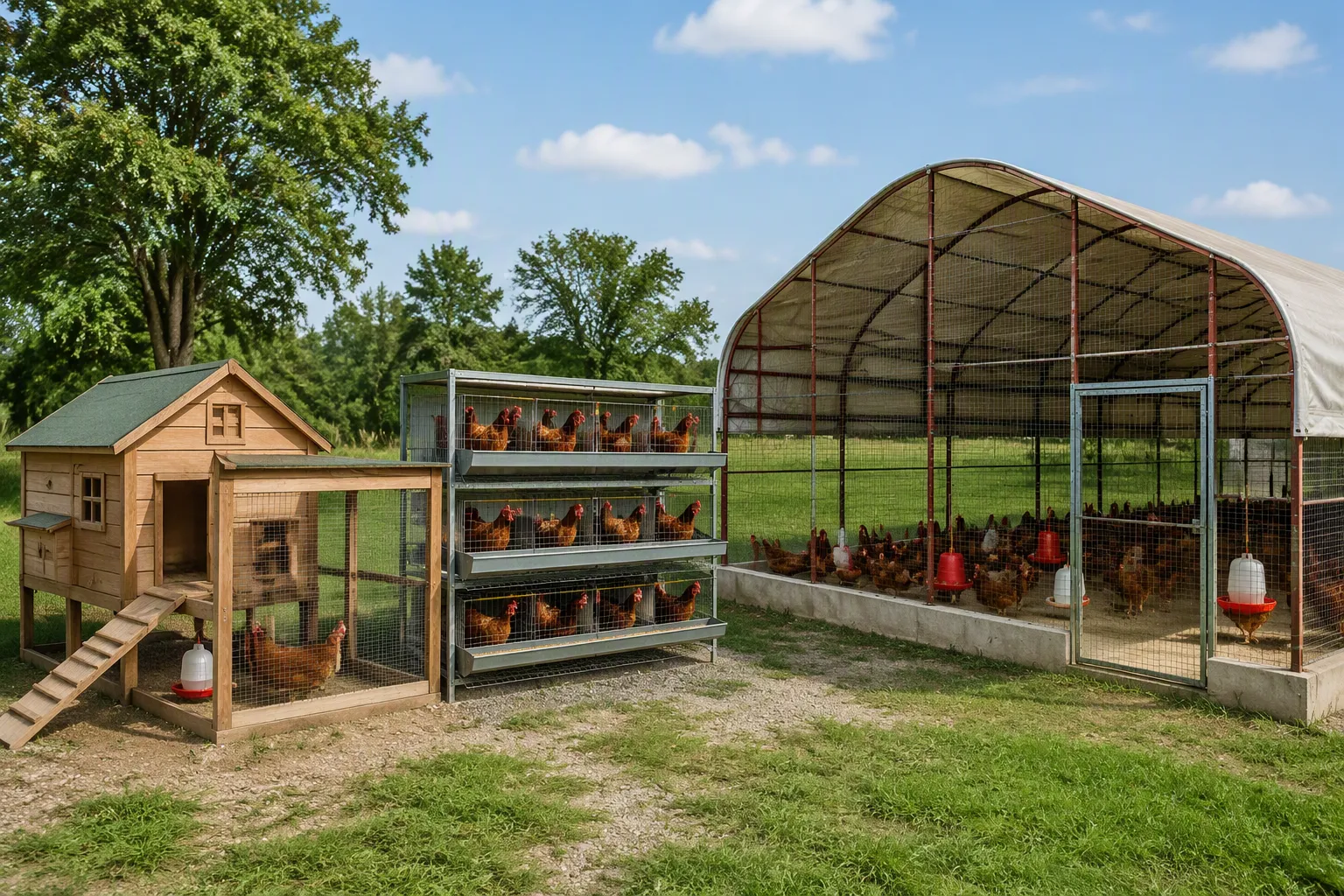
A Chicken Coop shelters a few backyard chickens, a chicken cage confines one or a small group, and a poultry house holds commercial flocks. These terms are not interchangeable. They describe different scales, purposes, and designs. According to the USDA, roughly 1 percent of U.S. households kept backyard fowl in 2013. Knowing these differences helps you pick the right structure.
Key Takeaways
A chicken coop suits small backyard flocks of 3 to 12 birds.
A chicken cage confines birds for commercial egg production.
A poultry house holds thousands of birds in a controlled environment.
What Is a Chicken Coop?
Definition and Purpose of a Chicken Coop
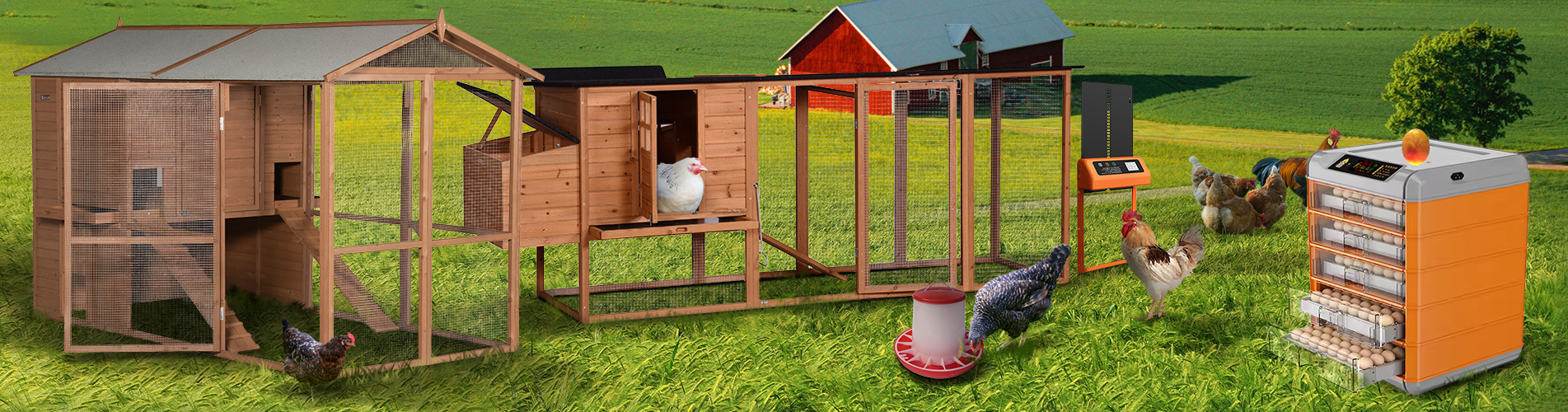
A chicken coop functions as a small shelter for your backyard flock. It provides protection from predators and harsh weather conditions. You use it mainly for roosting at night and egg-laying during the day. A well-designed chicken coop gives your birds a safe space to sleep. It also offers a controlled environment where your hens can lay eggs without stress. The primary purpose of a chicken coop is security and comfort for a small number of birds. You must ensure proper ventilation to prevent respiratory issues.
Design and Size of a Chicken Coop
You design a chicken coop with essential features like nesting boxes, roosting bars, and ventilation openings. Poultry experts recommend at least four square feet of indoor space per chicken. Some guides suggest two to three square feet for smaller breeds. The Poultry Extension article advises three to four square feet per hen for laying breeds. You should also include an outdoor run for exercise. A mobile design allows you to rotate grazing areas easily. The height of the coop should allow you to stand comfortably inside for cleaning.
Typical Use of a Chicken Coop
You use a chicken coop for backyard flocks of three to twelve birds. It suits hobby keepers who want fresh eggs daily. Families and small-scale homesteaders typically own a chicken coop. You clean it regularly and collect eggs each morning. This structure works well for non-commercial poultry keeping. You can also add automatic feeders and waterers for convenience.
What Is a Chicken Cage?
Definition and Purpose of a Chicken Cage
A chicken cage confines birds to a strictly controlled environment. You use these systems primarily for large-scale commercial egg production. Their purpose centers on maximizing efficiency and ensuring food safety. These systems became the global standard for egg production in the mid-20th century. The controlled environment dramatically reduces predation risk. In free-range systems, predation kills approximately 3.7% of hens. This results in economic losses of up to $6,700 EUR per organic farm. You choose cages to avoid these losses and to maintain reliable feed conversion.
Design and Size of a Chicken Cage
You construct chicken cages from durable wire or mesh materials. The design incorporates automated feeders, waterers, and egg collection belts. You provide a specific amount of floor space per bird.
Bird Space: 750–900 cm²/Hen Providing at least 750 cm² per hen
This standardized space allowance supports higher stocking densities than alternative systems. The design limits contact with litter. This reduction lowers the risk of certain diseases and internal parasites. You can inspect the entire flock daily in this contained environment.
Typical Use of a Chicken Cage
You find chicken cages in commercial layer operations. You use them to produce consistent, high-volume egg output. Well-managed cage systems often achieve lower mortality rates than free-range counterparts. They also produce a more efficient feed conversion ratio. This efficiency translates to lower feed costs per dozen eggs. You rely on this system for its predictability and ease of daily management.
What Is a Poultry House?
Definition and Purpose of a Poultry House
A poultry house is a large, climate-controlled building designed for commercial-scale chicken production. You use it to house hundreds or thousands of birds at once. The primary purpose involves maximizing production efficiency while maintaining bird health and welfare. Unlike a backyard coop, a poultry house relies on advanced environmental management rather than passive ventilation. You can achieve consistent growth rates and egg production through precise control of temperature, humidity, and air quality.
Design and Size of a Poultry House
You equip a modern poultry house with automated systems that regulate every aspect of the indoor environment. The table below outlines the critical parameters you must control.
Environmental Parameter
Target Range or Function
Temperature
18–24°C for layers; 21–26°C for broilers
Humidity
50–70% relative humidity
Air Speed
2.5–3.5 m/s in tunnel mode
Ammonia Level
Keep below 20 ppm
Lighting
Programmable intensity and duration schedules
An environmental controller serves as the central brain for your operation. It manages ventilation fans, cooling pads, and lighting schedules automatically. You can monitor and adjust these systems remotely via touchscreen interfaces and mobile apps. Alarm systems alert you immediately to power failures or equipment malfunctions.
Stocking density varies by climate and production standards.
Optimal stocking density ranges between 30–35 kg/m². This density yields the best feed conversion ratio of 1.65–1.75 and keeps mortality below 5%.
Typical Use of a Poultry House
You use a poultry house for commercial broiler or layer operations. These buildings house birds from day-old chicks through market weight or through the entire laying cycle. You rely on them for consistent, high-volume meat or egg production. Biosecurity protocols are strict. You limit visitor access and use footbaths and dedicated clothing to prevent disease introduction. Regular monitoring of litter quality, gas concentrations, and bird behavior ensures optimal conditions throughout each production cycle.
Key Differences at a Glance
You now understand the basic definition of each structure. The next step involves a direct comparison. This section breaks down the three structures across size, purpose, confinement, cost, and maintenance. These factors determine which option fits your situation.
Size and Capacity Compared
Size represents the most obvious difference among the three structures. A chicken coop typically houses three to twelve birds. You measure its footprint in square feet. A standard backyard coop occupies roughly 20 to 50 square feet of floor space. You can often move a small coop by hand or with a garden cart.
A chicken cage holds one bird or a very small group. You measure its capacity in square centimeters per hen. A single cage unit provides 750 to 900 square centimeters of floor space. You stack these units in rows and tiers inside a larger building. A single cage row can contain hundreds of individual units.
A poultry house dwarfs both of these structures. You measure its capacity in thousands of birds. A typical commercial broiler house measures 40 to 60 feet wide and 400 to 600 feet long. This single building can hold 20,000 to 30,000 birds at once. You cannot move a poultry house once you construct it.
The table below summarizes these size differences.
Structure
Typical Capacity
Floor Space per Bird
Portability
Chicken Coop
3–12 birds
2–4 sq ft
Movable
Chicken Cage
1–10 birds per unit
750–900 cm²
Fixed within building
Poultry House
20,000–30,000 birds
30–35 kg/m²
Permanent structure
Purpose and Confinement Compared
Purpose separates these structures into distinct categories. A chicken coop provides shelter and security for backyard flocks. You give your birds freedom to roam inside a run during the day. They return to the coop at night for roosting and laying. The confinement level remains low. Your chickens experience natural behaviors like dust bathing, foraging, and social interaction.
A chicken cage restricts movement to a minimal space. You control every aspect of the bird's environment. Feed and water arrive through automated systems. Eggs roll onto collection belts. The bird cannot walk more than a few steps in any direction. This high confinement level maximizes production efficiency. It also minimizes feed waste and disease transmission.
A poultry house occupies a middle ground between these extremes. You house birds in large open floor areas inside the building. The birds move freely within the structure. They cannot leave the building. You control temperature, humidity, lighting, and air quality with precision. The confinement level stays moderate. Birds express natural behaviors within the limits of the indoor environment.
Confinement level directly affects bird welfare, production efficiency, and your management workload.
Cost and Maintenance Compared
Cost varies dramatically across these three structures. A basic chicken coop costs $200 to $800 for a small backyard model. You can build a DIY coop for $100 to $300 in materials. Monthly maintenance costs remain low. You spend $20 to $50 per month on feed, bedding, and supplies for a small flock. You perform daily tasks like feeding, watering, and egg collection. Weekly tasks include cleaning nesting boxes and checking for pests.
A chicken cage system requires a substantial upfront investment. A single cage unit costs $5 to $15. A full commercial cage system with automated equipment costs $50,000 to $200,000 or more. You must install feeding systems, watering lines, egg belts, and manure removal equipment. Monthly operating costs include electricity, feed, and labor. You rely on automated systems to reduce daily labor. You still inspect the flock daily and maintain equipment regularly.
A poultry house demands the highest capital investment. Construction costs range from $200,000 to $500,000 for a standard broiler house. You must add environmental controllers, ventilation fans, cooling pads, heating systems, and backup generators. These systems add another $50,000 to $150,000. Monthly operating costs reach $5,000 to $15,000 for feed, electricity, labor, and maintenance. You monitor environmental parameters continuously. You also follow strict biosecurity protocols to protect your investment.
The table below compares these cost factors.
Cost Factor
Chicken Coop
Chicken Cage
Poultry House
Upfront Cost
$100–$800
$50,000–$200,000+
$250,000–$650,000+
Monthly Operating Cost
$20–$50
$1,000–$5,000
$5,000–$15,000
Daily Labor
15–30 minutes
1–2 hours
2–4 hours
Automation Level
Low
High
Very High
Maintenance Complexity
Simple
Moderate
Complex
Your choice depends on your budget, available time, and production goals. A chicken coop suits hobbyists who want fresh eggs and enjoy daily interaction with their birds. A cage system suits operations that prioritize efficiency and consistent output. A poultry house suits commercial producers who need high-volume production and precise environmental control.
Which One Should You Choose?
Your flock size, production goals, and local regulations determine the right structure. Each option serves a distinct purpose.
Best Choice for Backyard Keepers
You should choose a chicken coop for a small backyard flock. Urban keepers face specific challenges like limited space and city ordinances. Several brands offer coops designed for these constraints.
Brand
Urban-Friendly Features
Cutest Coops
Amish-built with heavy-duty screens and secure locks
OverEZ
Sturdy US-made design with minimal assembly
Roost & Root
Compact cedar construction; Model 2 holds five chickens
The Chicken Coop Company
Modern styling that fits contemporary landscaping
You must check local city ordinances before purchasing. Many cities limit flock size and prohibit roosters.
Best Choice for Small Farms
A chicken cage or small poultry house suits your small farm operation. Zoning regulations vary by location. Agricultural zones typically allow chickens with few restrictions. Rural residential zones often permit six to twelve birds. Suburban zones frequently allow four to six hens but ban roosters. You should verify setback requirements. Barns typically need 50 to 100 feet of separation from property boundaries. Manure management plans may also be required.
Best Choice for Commercial Operations
A poultry house is your only viable option for commercial-scale production. You need thousands of birds to achieve profitable output. Cage-free systems offer growing market opportunities.
Aviary systems are typically used for large-scale production and are a popular choice with producers transitioning from cage to cage-free production as they maximise use of vertical space.
Multi-tier aviaries allow higher bird density per square foot. Well-trained birds at appropriate density show extended production cycles of 94 to 96 weeks. This yields more eggs per bird and lower cost per egg. Higher initial costs are offset by long-term ROI gains.
Size, purpose, and confinement level define the differences among these structures. A Chicken Coop serves your backyard flock best. Cages provide confined housing for specialized production. Poultry houses support large-scale commercial operations. Match your choice to your flock size, production goals, and local regulations.
FAQ
Can you use a poultry house for a small backyard flock?
No. Poultry houses cost hundreds of thousands of dollars. They hold thousands of birds. A chicken coop better suits your three to twelve hens.
Should you choose a chicken cage for your backyard chickens?
No. Cages restrict movement to less than one square meter. Your flock needs space for foraging, dust bathing, and roosting naturally.
Do you need a permit for a poultry house?
Yes. Most jurisdictions require building permits and agricultural zoning approval. You also need environmental inspections for waste management.
Read More



 IPv6 network supported